




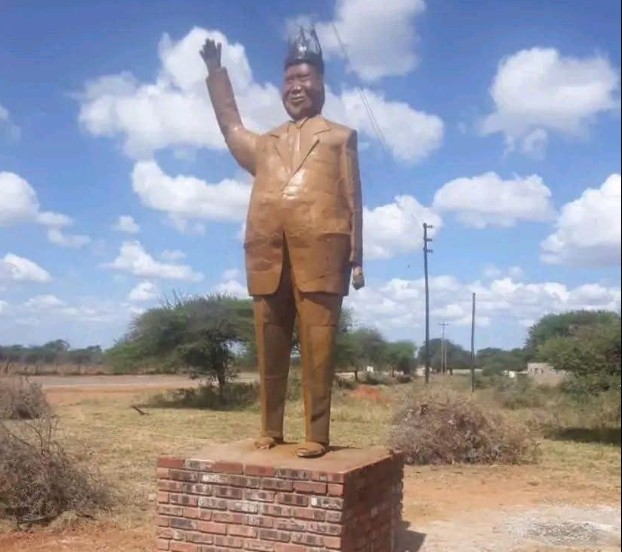


It was meant to be an honour. Just before the 46th Independence Day celebrations in Maphisa, a statue of the late Vice President Joshua Mqabuko Nkomo appeared. The public reaction was swift and brutal, poor likeness, distorted features, a public mockery of Father Zimbabwe.
Then, overnight, it vanished. No press conference. No admission of fault. Matabeleland South Minister of State Albert Nguluvhe later admitted: “We don’t even know who built and erected it there. It was put there at night. That’s why it was removed.”
Think about that. A statue of a national icon, dumped in his home province, with no known author, no contract on record, no one accountable. And when the embarrassment became too loud, it simply disappeared in the dark.
That statue is not the problem. It is the perfect symbol of the problem.
The real crisis: No one is serious about tenders
Across Zimbabwe, the same pattern repeats. Tenders are awarded at ridiculous pricing, but the execution is even more ridiculous. Everyone who gets a tender gets paid, fully, upfront, often without proper oversight, but actually doing the work? Optional.
Consider our roads. Not long ago, we praised infrastructure development. New tar, new bridges. Fast forward a few rainy seasons, and those same roads are already potholed. Who signed off on substandard work? Who inspected and approved? No one is held accountable.
The Gwanda solar project was announced with fanfare. Groundbreaking ceremonies. Grand promises of energy for Matabeleland South. Today? Nothing. Just a ghost project and disappeared funds.
The goat scandal? It became a joke, but it exposed a rotten system. Tenders awarded, money released, and what did communities receive? Sick animals, inflated prices, and zero value for money.
Even during elections, basic logistics fail. Ballot papers run out. In a country that has held polls for decades. That is not incompetence; that is what happens when tenders for printing and distribution are treated as cash grabs rather than serious contracts.
The statue is the mirror
That shoddy statue in Maphisa, erected by persons unknown, paid for by God knows who, removed under cover of darkness, is not an isolated embarrassment. It is exactly how we handle everything else.
No one knows who built it. No one signed off on quality. No one is responsible. And when it became a problem, it was erased like a bad memory.
That is the state of tenders in Zimbabwe. We pay for Mercedes’ work and receive wheelbarrow results. We award contracts to connected companies, not capable ones. We celebrate “infrastructure development” while roads crumble within months. We announce solar projects that never produce a single watt. We run out of ballot papers during elections.
And when anyone complains, the problem simply disappears overnight, leaving no trace, no accountability, no change.
We need more than statue removals
Removing a bad statue does not fix a broken system. Until we start asking serious questions, who awarded that tender? At what cost? To whom? What quality controls existed? Who inspected? The cycle will continue.
The Maphisa statue was an insult to Joshua Nkomo. But the tender system that produced it, and the culture of no accountability that allowed it to happen, is an insult to every Zimbabwean.
We deserve better than shoddy statues, crumbling roads and vanished solar projects. We deserve a tender system that works. But first, we need the courage to stop removing our problems in the night, and start naming them in the light.






Leave a Reply Cancel reply