




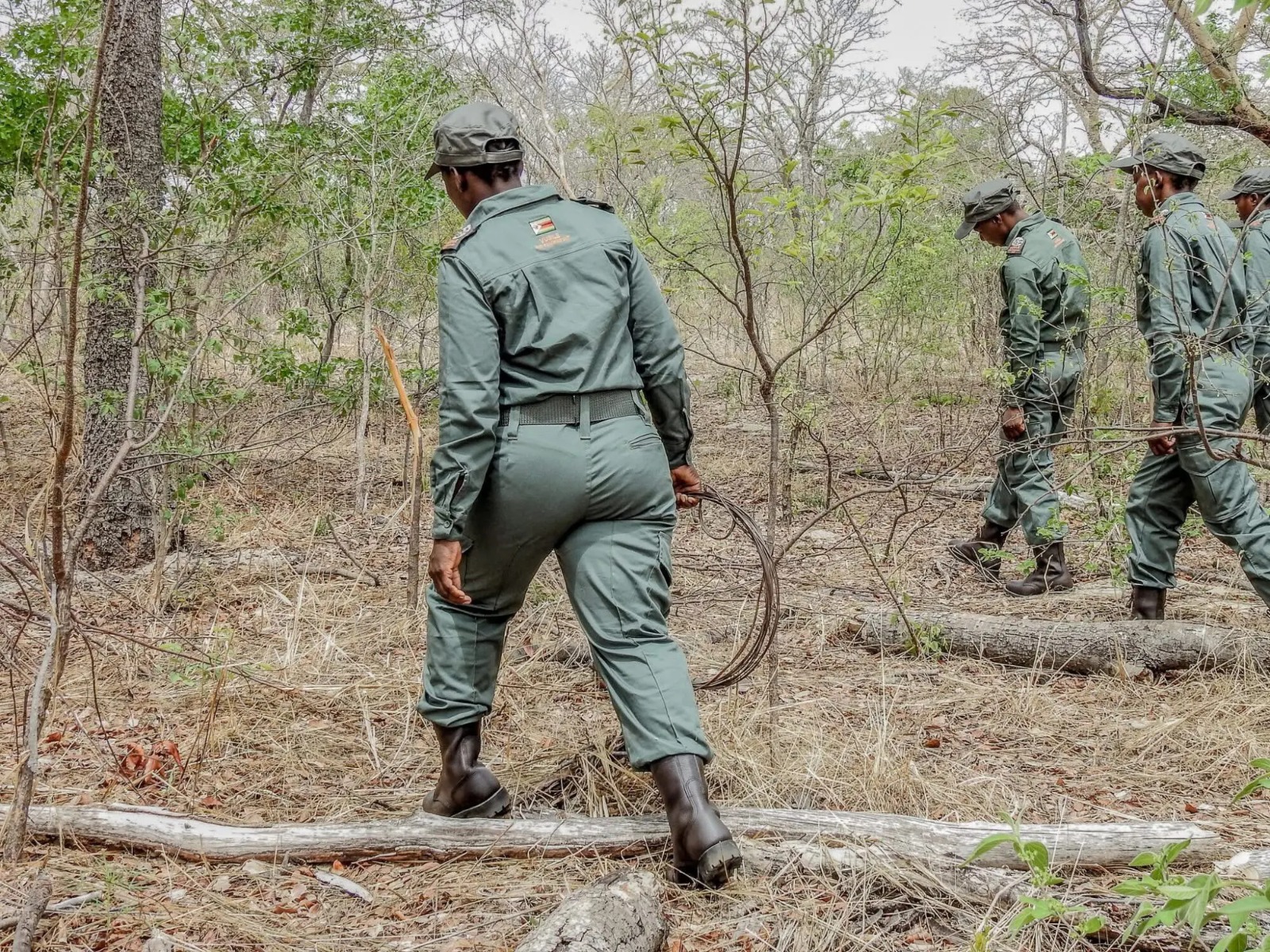


More than 3,500 snares have been removed from a single den site of wild dogs in the Hwange National Park as conservationists step up efforts to combat poaching, particularly of endangered species.
The wire traps, often set for bushmeat, also pose a serious threat to the African wild dog — one of Africa’s most endangered predators.
A new report by Painted Dog Conservation (PDC) highlights a sharp rise in poaching pressure over the past year.
More than 3,500 wire snares were removed around a single den site belonging to the Umkhonto Pack.
The traps, typically made from fencing wire, are intended to catch antelope and other animals for bushmeat, but they often injure or kill non-target species, including apex predators.
PDC described the protection of the Umkhonto Pack as one of its most significant conservation successes of 2025.
In its assessment, the organisation said over 3,500 snares were cleared from the area surrounding the pack’s den.
Eleven suspected poachers were arrested, including one offender who received two consecutive nine-year prison sentences.
During the denning period, all eight pups survived. The pack grew to a peak of 29 individuals before natural dispersal reduced its number to 19 by the end of the year. It now largely ranges within the relative safety of Hwange National Park, although it occasionally moves beyond its boundaries.
However, the scale of snaring around a single site underlines what the report describes as “intense poaching pressure” across the wider ecosystem.
Other packs in and around the park include the Kingsbury, Emerald and Batsha packs, as well as the Chowato, Linkwasha, Cave, Intundla, Khumbula and Garikamwe groups.
Local leaders say the rise in snaring is linked to worsening economic hardship in communities bordering the park.
Village elder Thabani Ndlovu said enforcement alone would not be enough to tackle the problem.
“The snares are made of fence wire because people have no fences for their own gardens and no food for their pots,” he said.
“To solve this, we must move beyond just arresting our way out of the problem. We need sustainable livelihoods.
“If the community sees that a live dog brings more value through tourism than a dead buck brings in meat, the wire will stop being laid.”
More: CITE





Leave a Reply Cancel reply