





A lot has been said about Constitutional Amendment Bill No. 3, but much of the public debate is missing one critical point: this is not technically about extending a presidential term. It is about creating a new one, and about when the trigger for that new office is pulled.
If current projections hold, the Bill will pass before the end of June 2026. What happens next depends on a political choice, not a constitutional requirement. Here is how.
The Bill Will Pass
The 90-day public consultation period for Constitutional Amendment No. 3 expires the week of 18 May 2026. Once concluded, the Bill proceeds to Parliament. ZANU PF’s supermajority, 177 of 280 seats, guarantees passage. The Bill itself adds ten presidential appointees to the Senate, expanding it to 90 members. By the end of June 2026, the Bill will be law.
Public commentary has focused on allegations of procedural irregularities. However, an examination of the recorded submissions shows that approximately 90 per cent of individuals who were permitted to speak and whose testimony was entered into the parliamentary record expressed support for the amendments. The official report will reflect this. Parliament is not required to consider unrecorded views. The consultation period will be certified as complete.
The Central Legal Innovation: A New Office
The central legal question is whether President Mnangagwa can benefit from the seven-year term. The government’s answer is precise: he does not benefit from an extension of his current term. Instead, the amended Constitution creates a new presidential office.
The Old Office (2013 Constitution):
· Elected by direct popular vote
· Five-year terms
· Two-term limit
· President Mnangagwa held this office from 2018 to 2028
The New Office (Amended Constitution):
· Elected by Parliament
· Seven-year terms
· Different powers, different electoral basis, different relationship to Parliament
· The President appoints ten additional Senators
· The President has expanded influence over judicial appointments
Because this is a different office, prior service in the old office does not count toward term limits for the new office. This is not an extension. It is a reset.
What the Bill Actually Says About Electing the President
Clause 2 of the Bill repeals the current Section 92 and substitutes a new provision. Subsection (2) states:
“The election must take place at a joint sitting of Parliament following the swearing in of Members of the Senate and the National Assembly and the election of the Speaker of the National Assembly and the President of the Senate, respectively, after every general election.”
The language is explicit. The presidential election happens after every general election, meaning after a new Parliament is elected and sworn in. Not during the current Parliament’s term.
This means the current Parliament (elected in 2023, term extended to 2030) cannot elect the President. Only a newly elected Parliament can do that.
The Two Pathways to a Presidential Election
Because the presidential election is tied to a general election, there are only two ways to trigger it:
Pathway A (The Decoy): Let the current Parliament run its full extended term to 2030. Hold a general election in 2030. A new Parliament is sworn in. That new Parliament elects the President. President Mnangagwa serves 2030-2037, and if re-elected, 2037-2044.
Pathway B (The Real Trap): After the Bill passes in June 2026, dissolve Parliament early. Hold a general election in late 2026 or early 2027. A new Parliament is sworn in. That new Parliament elects the President. President Mnangagwa serves 2027-2034, and if re-elected, 2034-2041.
Pathway B is legally available because Section 143(3) of the Constitution (which the Bill does not amend) gives the President power to dissolve Parliament early under certain conditions. Alternatively, Parliament can vote to dissolve itself under Section 143(2) with a two-thirds majority, which ZANU-PF has.
Why Pathway B Is the Real Trap
The public is being told to focus on 2030. The opposition is planning for 2030. Civil society is organising for 2030. The “2030 Agenda” has everyone looking at that date.
But the Bill does not require Parliament to sit until 2030. It only says Parliament may serve a seven-year term. Early dissolution remains legally available.
If the government dissolves Parliament in late 2026:
· October 2026: Parliament dissolved
· January 2027: General election held (within 90 days)
· January 2027: New Parliament sworn in
· January 2027: New Parliament elects President Mnangagwa
· January 2027 – January 2034: President serves a seven-year term
· 2034: Eligible for re-election for a second seven-year term
· 2034-2041: Second term
This achieves the same result as the 2030 pathway, a seven-year term, then possible re-election, but seven years earlier. President Mnangagwa would be 99 years old at the end of a second term in 2041.
Why No One Is Preparing For This Scenario
Because everyone is looking at 2028 and 2030. The government has successfully fixed public attention on distant dates while holding the power to move much earlier.
The current Parliament has already been “greased.” Your earlier analysis documented that MPs received substantial inducements, cash payments, and housing stands to secure loyalty. That investment is not wasted if Parliament is dissolved early. The loyalty was always about passing the Bill itself, not about serving the full term.
The “continuation in office” language in Section 95(2a) keeps President Mnangagwa in power throughout. He does not step down when Parliament dissolves. He remains President, calls the election, oversees it, and then stands as the candidate for the new office.
The Legal Challenge: Why It Will Not Stop the Bill
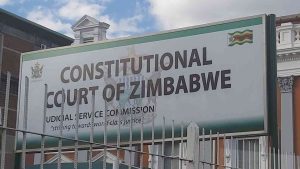
Former opposition MP Prince Dubeko Sibanda has filed an urgent application in the Constitutional Court challenging the “notwithstanding section 328(7)” clauses. He argues that Parliament cannot override a constitutional safeguard.
This challenge is unlikely to stop the Bill for three reasons.
First, Sibanda seeks only the severance of the “notwithstanding” clauses, not the entire Bill. Even if he succeeds, the core provisions, seven-year terms, and parliamentary election of the President, remain.
Second, the government will rely on the Constitutional Court’s 2021 Mupungu precedent, which distinguished between term limits (number of terms) and tenure conditions (length of each term).
Third, even if the Court strikes down the “notwithstanding” clauses, the parliamentary election system remains. The only question is whether the seven-year term applies to the incumbent. The government can still trigger an early election and argue that the newly elected President, even if it is the same person, is serving a first term under the new office.
The Trap Is Not 2030. It Is 2026.
The Bill will pass. What happens next is a political choice, not a constitutional requirement.
If the government wants the public to believe in 2030, it will let Parliament sit until 2030. If it wants to strike early, it will dissolve Parliament in late 2026 and hold a general election. Either way, the result is the same: President Mnangagwa stands for election to a new seven-year term. Either way, he could serve until 2041 or 2044.
The “2030 Agenda” was never about 2030. It was about fixing public attention on a distant date while holding the legal power to move much earlier.
Do not look at 2030. Look at the months after the Bill passes. That is when the real move will be made.
Contributed by Benedict Makore, a political and social commentator based in Harare.





Leave a Reply Cancel reply