




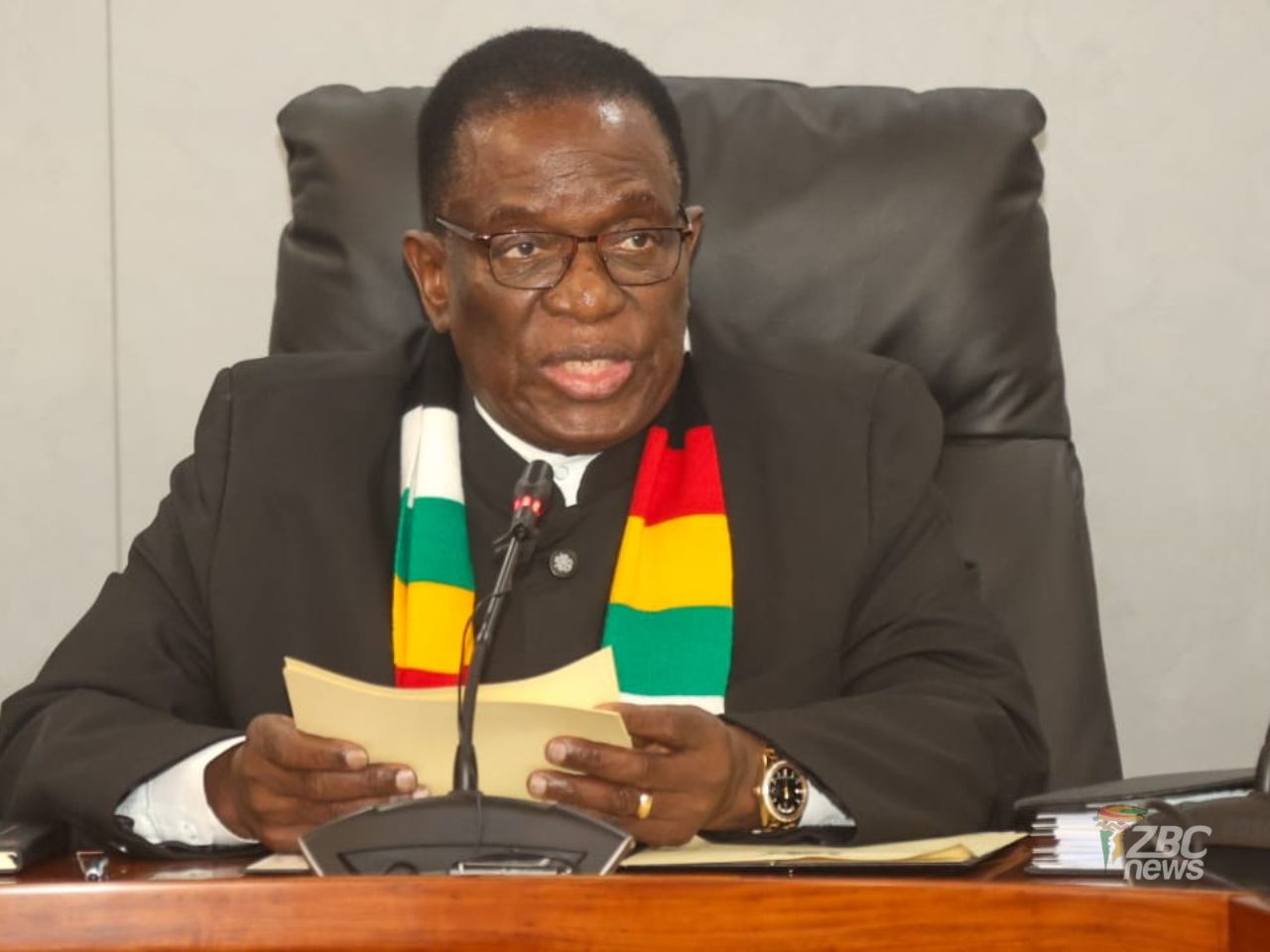


President Emmerson Mnangagwa chaired the first Cabinet meeting of 2026 on Tuesday at the Munhumutapa Government Offices, calling on ministers to maintain a culture of hard work, patriotism, and unity of purpose.
In his address, President Mnangagwa commended Cabinet members for availing themselves during the break when duty required, stressing that the resilience and commitment exhibited over the past years must be harnessed again in this new phase.
He noted that a culture of results had become embedded in the nation’s identity and urged the Government to sustain momentum on a people-centred growth trajectory.
The President warned against petty competitiveness among ministries, emphasising the need to focus on achieving the National Development Strategy 2 (NDS2) goals and Vision 2030.
He declared intolerance for anything that could slow progress and called on the media to perform its role responsibly, placing national interest at the centre of reporting.
President Mnangagwa directed that the reduction of licence fees be completed within the first quarter to create space for business growth and challenged ministries, departments, and agencies (MDAs) to scale up engagement with the private sector.
He reaffirmed the ruling ZANU-PF party’s commitment to people-centred governance and acknowledged favourable rain patterns, anticipating a successful agricultural season.
He assured government assistance where adverse weather effects occurred and instructed responsible ministers to consolidate reports so affected communities could be helped.
Extending solidarity to regional neighbours affected by natural disasters, the President affirmed SADC cooperation and pledged continued support for mitigation where needed. He also urged motorists and citizens to exercise extreme caution on the roads.
The President reminded ministers that the trust placed in them by the citizenry must be honoured, and that decisions taken in 2026 would impact the motherland and must be carried out with seriousness and vigour.
He ordered the speeding up of processes and projects, warning that delays and “sitting on documents” would not be condoned.
Attendance of Cabinet and Cabinet Committee meetings was declared mandatory, with poor representation by Deputy Ministers when principals were absent set to be blamed on the responsible minister.
He also required the timely submission of programmes and projects needing presidential presence and warned that sporadic invitations for commissioning events would be unwelcome.
President Mnangagwa also challenged the media to uphold responsible journalism, recognising its critical role in nation-building and placing national interest above all.





Leave a Reply Cancel reply