




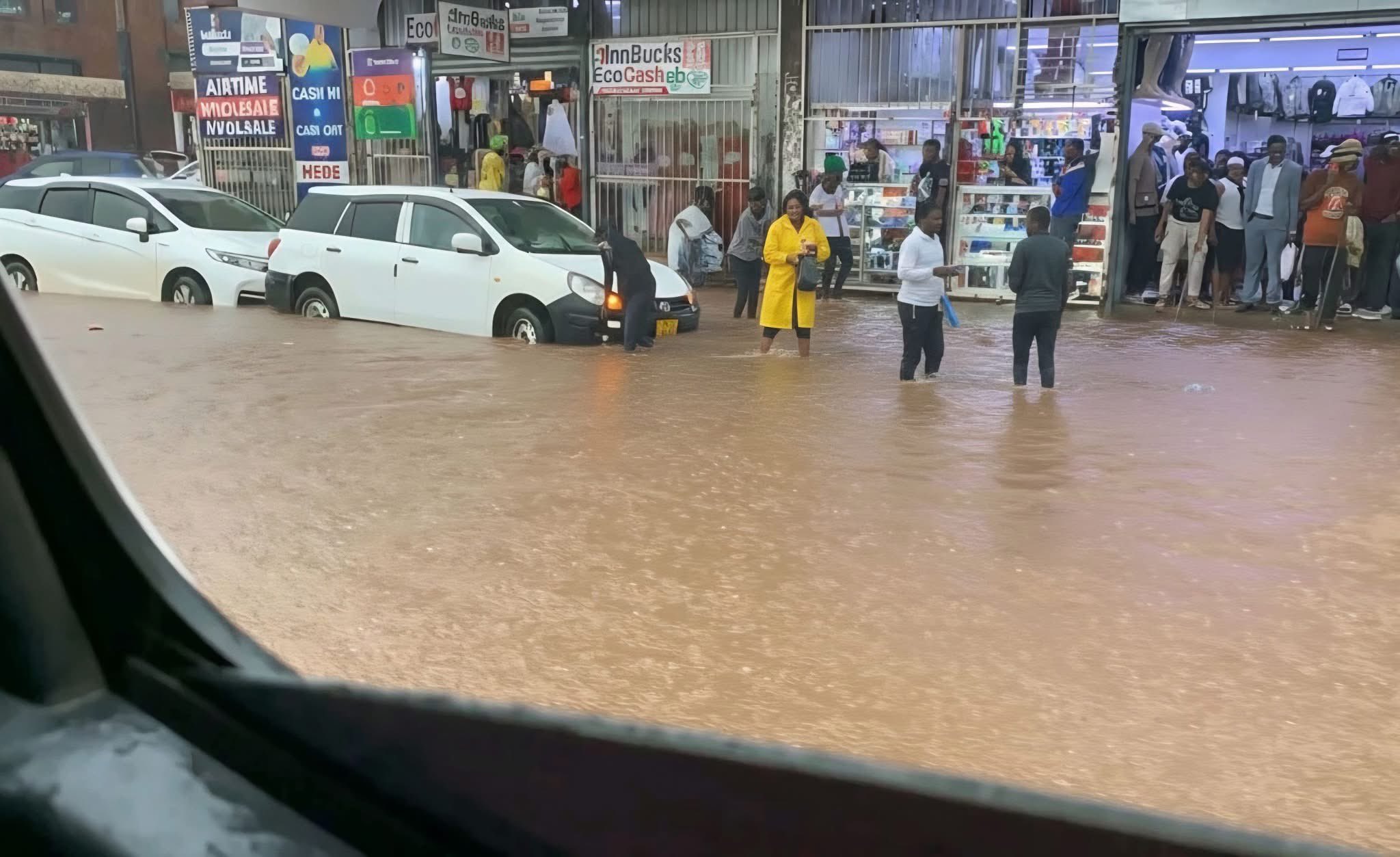


The Combined Harare Residents Association (CHRA) says the recent floods in Harare are not just due to heavy rainfall, but are the result of poor spatial planning, corruption, misplaced priorities, and the ongoing neglect of drainage infrastructure.
Heavy rain battered Harare on Sunday, causing flooding of streets not only in the Central Business District but also in western suburbs such as Glenview and Budiriro, which are prone to urban flooding.
In a statement on 12 January 2026, CHRA said that over the years, the City of Harare has been allocating housing stands on wetlands, open spaces, and waterways. This has exposed residents to natural disasters, including flooding. CHRA added:
“Poor revenue inflows saw land sales becoming a lucrative source of revenue to the local authority to pay for salaries for its workers, a practice which was then stopped by the Ministry of Local Government through a directive, but the damage was collateral.
“The situation has been further exacerbated by land invasions spearheaded by powerfully connected land barons and the emergence of informal settlements.
“Spatial planning in Harare has been motivated by economic gain while neglecting the natural environment, which severely undermines Zimbabwe’s progress towards Sustainable Development Goal 11 (SDG 11), which aims to make cities inclusive, safe, resilient, and sustainable.”
CHRA said that while it recognises that rural-urban migration has put pressure on land for housing and other social services, land allocation must be done in a more organised and sustainable way.
The organisation warned the City of Harare that it cannot continue to ignore the gazetted Ecologically Sensitive Areas Map in its planning and expect normal conditions.
CHRA stressed that building on wetlands is self-destructive and counterproductive, adding that the practice worsens flooding, poses health risks, and threatens the city’s long-term water and food security.
The group recommended urgent rehabilitation and upgrading of the drainage system, integrating the City’s environmental division into spatial planning decisions, completing the Master Plan, and ensuring strict adherence to environmental laws in all planning processes.






Leave a Reply Cancel reply