




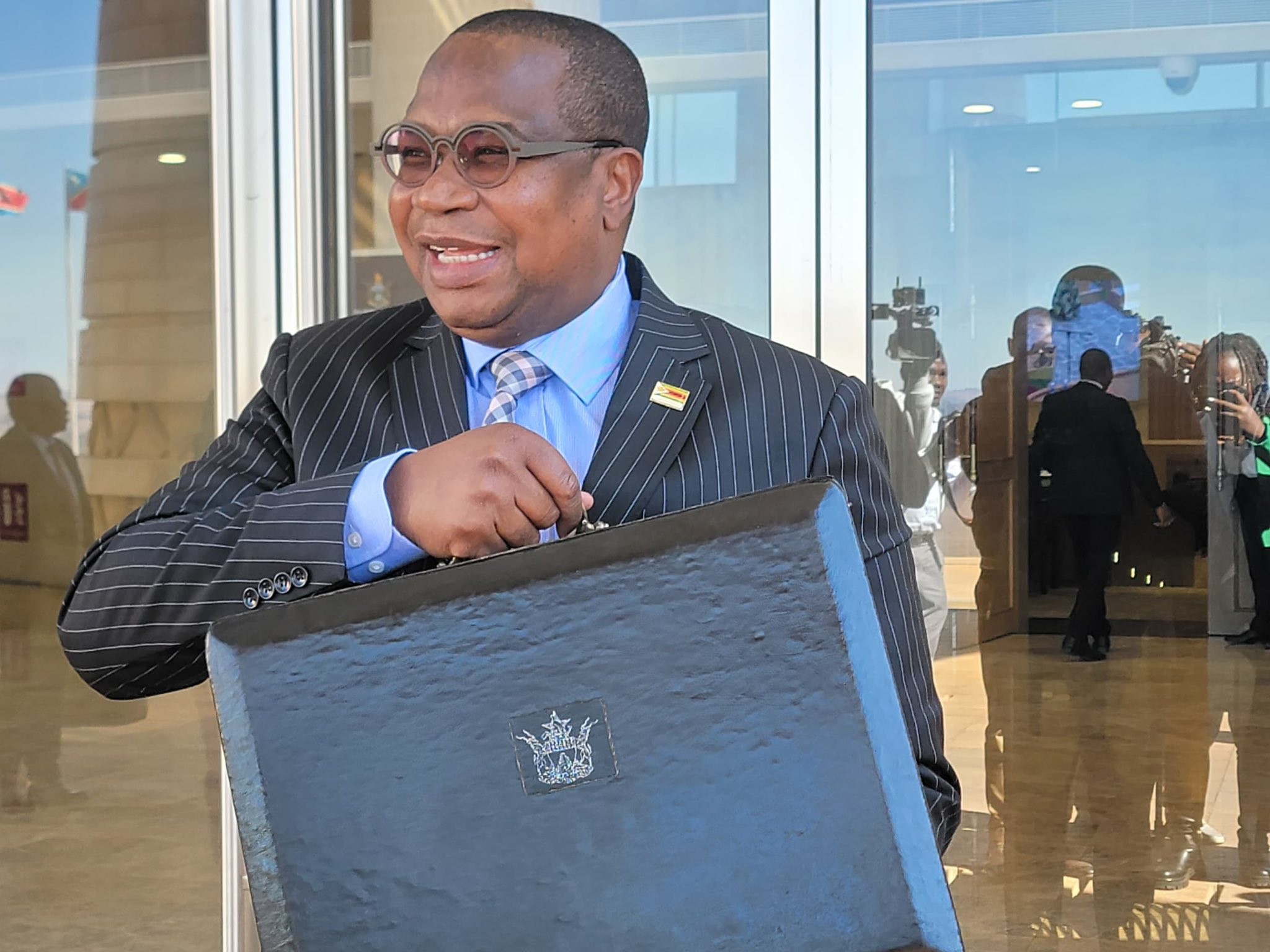


Finance Minister Mthuli Ncube has dismissed Parliament’s calls to review two of Zimbabwe’s most controversial tax measures: the 2% US-dollar Intermediated Money Transfer Tax (IMTT) and the recent VAT hike.
In his 2026 budget, Ncube proposed reducing the local-currency IMTT from 2% to 1.5%, while keeping the 2% levy on US-dollar transfers.
On Wednesday, he reiterated that Treasury would not back down, despite pressure from lawmakers who say the IMTT is distorting the financial system, discouraging formal banking, and harming long-term revenue mobilisation. He told MPs:
“The first one is on IMTT tax in terms of the rate. The report does recognise that we have made adjustments in two ways.
“That we have made it a tax-deductible, or rather turned it into a tax-deductible expense as well as reduced it when it comes to ZiG transactions from 2% to 1.5%.
“However, the request was that perhaps we should try to equalise on both currencies.
“On this one, that is exactly what we do not want to do, actually.
“We want to make sure that ZiG transactions have an advantage over USD transactions, so we really want to maintain this proposal in this Budget.”
On VAT, Ncube again pushed back, insisting that Zimbabwe remains in line with regional benchmarks. He said:
“When it comes to the issue of VAT, again, the report does mention that it was a small increase, only 0.5%.
“Other countries like Zambia and Mozambique are already at 16%, much higher than us, even after the increase, and Tanzania, in fact, is at 18%.
“If you consider the VAT rates, for example, the VAT rate in Zambia is 16%, Mozambique is at 16% and Tanzania is at 18%.”
“With our new proposal, we are at 15.5%. We are still within some of the VAT rates in some of these countries that I have mentioned.
“Besides, our 14 core commodities that are consumed by the low-income groups… these have attracted 0% VAT. They are already protected from VAT.”
More: Business Times







Leave a Reply Cancel reply