




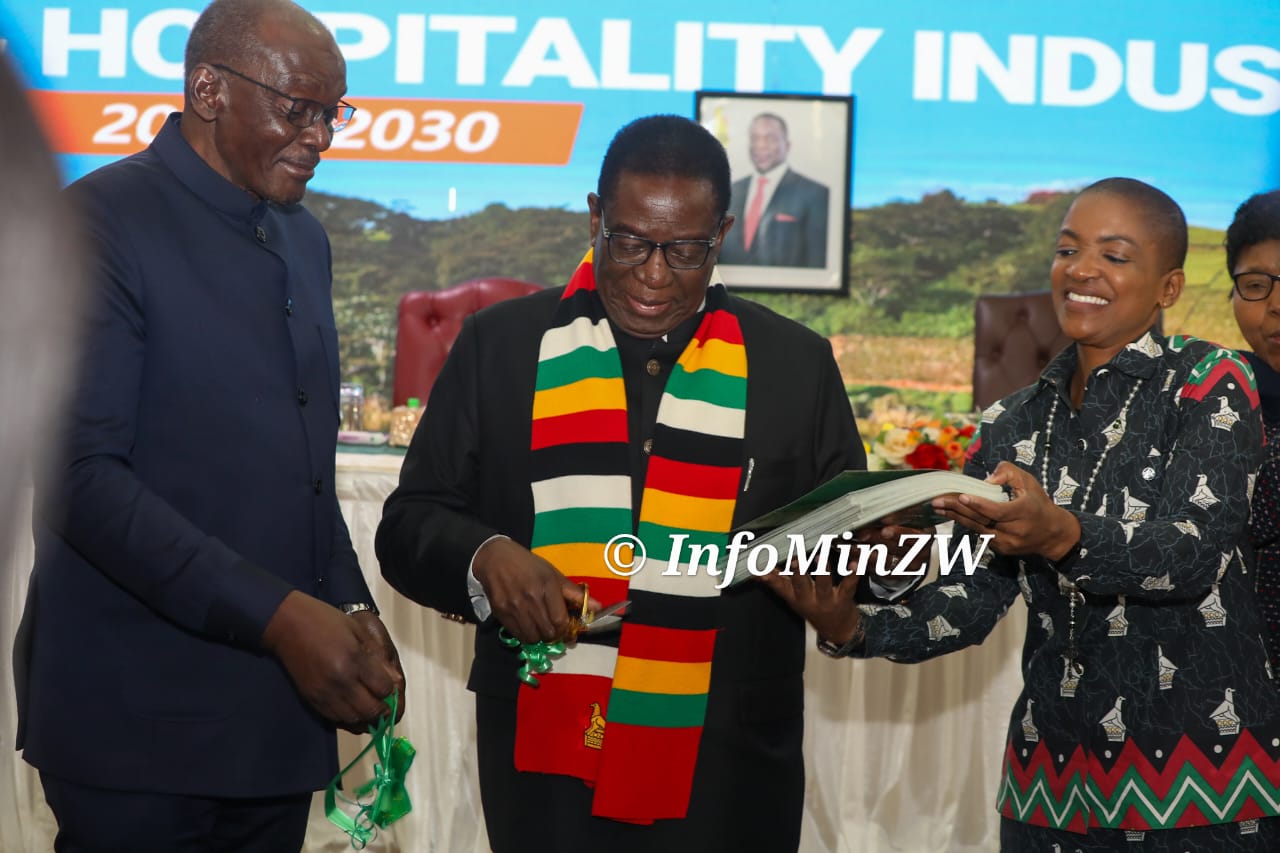


Zimbabwe’s newly proposed Tourism Bill has been described as “a looter’s charter,” which will entrench corruption, enable political cronyism, and suffocate small operators in the tourism sector.
The remarks were made by investigative journalist Hopewell Chin’ono shortly after President Emmerson Mnangagwa launched the Tourism and Hospitality Industry Policy (2025-2030) on Monday, August 4, at State House in Harare.
The policy package includes the controversial Tourism Bill, which Chin’ono argues will centralise power and open the door to unchecked ministerial control over one of the country’s key economic sectors.
Among those present at the policy launch was Tourism and Hospitality Industry Minister Barbara Rwodzi, who will play a pivotal role if the bill is enacted.
The draft law has raised eyebrows for granting sweeping powers to the tourism minister. Clause 9 allows the minister to issue binding policy directives to the Zimbabwe Tourism Authority (ZTA), effectively undermining its independence.
Further clauses give the minister control over the Tourism Fund (Clause 18), authority to designate tourist facilities (Clause 22), and the final say in appeal processes (Clause 42). Said Chin’ono:
This undermines the autonomy of the ZTA and politicises decision making.
Clause 17 of the bill introduces the Mosi Oa Tunya Development Company, a government-owned entity with powers to expand operations and establish subsidiaries.
Chin’ono said this provision creates an opaque framework for asset acquisition by politically connected elites under the guise of development. He said:
It creates an entity called Mosi Oa Tunya Development Company, which of course has the power to cause cronyism and corruption. Clause 17 of the bill empowers the minister to expand this opaque government-owned company and register more subsidiaries. This opens the door for politically connected elites to grab tourism assets under the guise of development through government.
Clauses 23 to 40 impose strict registration, licensing, inspection, and compliance obligations on tourism operators.
These include mandatory record-keeping, annual licence renewals, and steep penalties for non-compliance—provisions Chin’ono says are hostile to informal and community-based tourism players. He said:
The bill is hostile to small and informal players through mandatory registration, licensing, inspections, fees, penalties, and compliance requirements, making it harder for informal or community-based tourism operators to survive (Clauses 23–40). Failure to comply will lead to fines, shutdowns, or imprisonment.
Chin’ono also raised alarm over Clause 44, which permits designated officers to search, question, and seize property without a warrant.
He argued that this will foster a culture of surveillance, especially targeting independent media and foreign journalists operating in Zimbabwe.
The bill also demands that digital platforms such as Airbnb register with the Authority and share user data (Clauses 32–35), a move seen as overregulation of the digital economy.
Under Clause 11, the minister is designated as the trustee of the Zimbabwe Tourism Fund, with control over disbursement of grants—yet the bill lacks any mechanisms for public accountability, reporting, or independent auditing of the fund’s expenditures. Said Chin’ono:
The Tourism Minister acts as trustee of the Zimbabwe Tourism Fund and controls grants (Clause 11), creating opacity over how money is allocated. There is no provision for public reporting or independent audit of the Fund’s expenditures.
Although indigenous rights are briefly mentioned in Clause 50, the bill fails to guarantee benefit-sharing or protect local communities from displacement in state-led tourism projects.
Overall, Chin’ono argued that the Tourism Bill 2025 is not designed to grow the sector or empower stakeholders, but to centralise control, weaken oversight, and facilitate looting. He said:
So, this Tourism Bill cloaks control and patronage in the language of reform. It concentrates power in the hands of the tourism minister, giving her broad, unchecked authority to government-appointed officers, and burdens operators with red tape while empowering a controversial state company to dominate the industry. It is a perfect law for cronyism and a nightmare for tourism growth in Zimbabwe.





Leave a Reply Cancel reply