





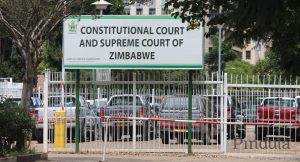
The Constitutional Court has overturned a landmark High Court judgment that sought to expand access to lawful abortion, leaving unresolved a fierce constitutional debate over women’s health, equality and dignity.
In a ruling delivered on Wednesday, the seven‑member bench declined to confirm declarations that parts of the Termination of Pregnancy Act were unconstitutional.
The judges found that the High Court had failed to conduct the full constitutional analysis required, particularly the test under section 86(2) of the Constitution, which demands that any limitation of rights be fair, reasonable, necessary and justifiable in a democratic society.
Justice Bharat Patel, writing for the court, emphasised that identifying a limitation of rights does not automatically render legislation unconstitutional.
“A finding that the impugned legislation limits a constitutional right does not, without more, render that legislation unconstitutional,” he said.
At the centre of the dispute was whether Zimbabwe’s abortion law, enacted in the 1970s, adequately protects women whose pregnancies threaten their mental health or arise from sexual conduct criminalised under the Mental Health Act.
The applicants — the Community Working Group on Health and legislator Nyasha Batitsa — argued that excluding mental health from lawful grounds for termination discriminates against women with severe psychiatric conditions. They warned that forcing such women to continue pregnancies could expose them to suicide, postpartum psychosis and long‑term psychological harm.
They also challenged the Act’s definition of “unlawful intercourse”, saying it failed to cover pregnancies resulting from sexual exploitation of women and girls with mental disabilities, despite protections under section 106 of the Mental Health Act.
The Ministers of Health and Justice defended the law, arguing that its reference to threats to life and serious impairment of physical health was broad enough to cover relevant medical circumstances. They warned against treating all mental health conditions alike and warned that abortion itself has been linked to mental health challenges.
The Justice Minister further argued that legislative reform should be pursued through Parliament rather than through the courts.
Parliament chose not to oppose the application, while the Attorney‑General sought to be excused, noting her role would be limited to drafting any amendments if required.
Two amici curiae (friends of the court) — the Catholic Lawyers Association of Zimbabwe and Pro‑Life Universitas — opposed the application. They argued that section 48 of the Constitution protects unborn life and that expanding abortion grounds was a matter for Parliament, not judicial intervention.
The Constitutional Court ultimately set aside the High Court ruling, with no order as to costs.
For women and girls whose circumstances formed the basis of the challenge, the decision is a setback.
Tendai Biti represented the applicants, while J Shumba appeared for the Ministers and Attorney‑General.
Advocates Agyver Saunyama and Fadzayi Mahere made submissions on behalf of the Catholic Lawyers Association and Pro‑Life Universitas.






Leave a Reply Cancel reply