






Prominent advocate Thabani Mpofu says the violent manner in which businessman and socialite Wicknell Chivayo died carries the “terrible hallmarks of judgment” and should serve as a warning to those in power not to trample upon the poor.
Writing on X on Sunday, Mpofu described the circumstances as “not ordinary”, but “brutal, deliberate and devastating”.
“The unrestrained violence inflicted on Wicknell at the time of his death was not ordinary. It was brutal, deliberate and devastating,” Mpofu said.
“Imagine, he will now be buried without his head as if the fact that his body parts were gathered into garbage bags wasn’t gruesome enough.
“To me, the violence carried the terrible hallmarks of judgment; vicious and absolute. I do not know whose judgment it was.
“I have my suspicions, but they are ultimately worth very little in the absence of evidence to confirm them.”
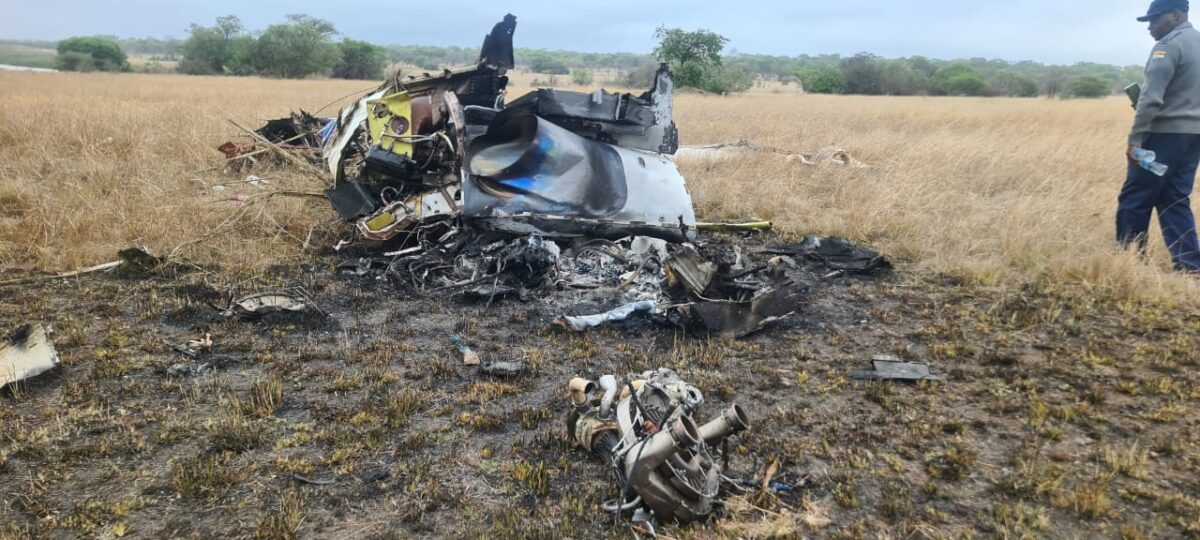
Chivayo, whose remains were said to have been charred beyond recognition, died in a helicopter crash that has triggered an outpouring of both grief and anger, owing to his controversial public life and close association with ZANU PF.
Mpofu, who described Chivayo as otherwise a “likeable figure before his vulgar shenanigans with ZANU PF for which he has been pilloried as public enemy number 1”, said his death spoke to a larger principle of accountability.
“What it speaks to, however, is unmistakable: one may act with impunity, protected by the power and favour of mortals, but no one escapes accountability forever. Every human being must eventually answer for what they have done,” he said.
According to Mpofu, the lesson from Chivayo’s demise was clear.
“Whatever power one acquires, one must never trample upon the aspirations of the poor or mock the suffering of the vulnerable. Their pain is not a spectacle, and their dignity is not yours to diminish. Neither should one pretend that there is no daylight between them and God.”
The advocate also criticised attempts to police public reaction to Chivayo’s death, arguing that the public tumult was an expression of long-held frustration.
“The deeper tragedy is that some people still refuse to see the lesson. Instead, they would rather emotionally blackmail us all, insisting that we suppress our views and deny the sense of closure most feel at what they regard as a deserved end,” he said.
“The public tumult acknowledges the consequences of a life lived in blasphemy, with pride and impunity and must be understood as such. It reiterates that power does not erase accountability, and that contempt for the poor and the powerless always carries a cost.”
Mpofu said the rhetorical question now circulating – “So who’s next?” – reflected public yearning for similar accountability for other “obnoxious” figures.
“In the tumult is the expression of both an expectation and a hope carried in the rhetorical question, So who’s next? Yes, the public yearns for similar judgment on the next obnoxious figure. Don’t be that person,” he said.







Leave a Reply Cancel reply