





Former Finance Minister Tendai Biti has criticised the World Bank’s decision to remove Zimbabwe from its list of fragile and conflict-affected economies, saying the reclassification does not reflect the country’s political, economic and social realities.
The World Bank last week delisted Zimbabwe from the fragile and conflict-affected situations category, with effect from 1 July, following an improvement in its Country Policy and Institutional Assessment score.
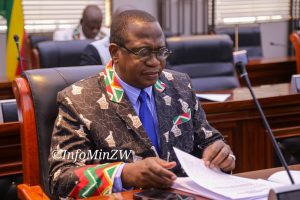
Finance Minister Mthuli Ncube described the move as a major milestone and a vote of confidence in the government’s reform programme.
But in a post on X, Biti said the decision was “made adhocratically, anecdotally and without empirical data” and was political.
He alleged that authorities in Harare had pushed for the reclassification to support President Emmerson Mnangagwa’s target of making Zimbabwe an upper-middle-income economy by 2030.
“In the process, phantom data is being cooked, particularly around GDP, GNI, to justify a higher per capita GNI. But the hard reality is that this is a poor, fragile state with 68% of the population living below the poverty line,” Biti wrote.
Biti argued that state fragility is defined by two key indices – politics and economics – and that Zimbabwe remains vulnerable on both.
On politics, he said the country remains fragile due to internal divisions within the ruling party, which he referred to as “cockpit fissures”, the Agenda 2030 debate, high levels of polarisation, toxicity, disputed elections and the closure of political space.
On economics, he pointed to the large number of Zimbabweans living outside the country, claiming more than six million are in the diaspora and that 74% of the country’s most qualified human resources are abroad. He said this, coupled with high levels of poverty, unemployment, informality and exclusion, magnifies fragility.
He also criticised the country’s social indicators, saying maternal and infant mortality rates are “medieval” and amount to “nothing short of soft genocide”.
“One does not need Mai Ezra from Chiendambuya as an exhibit for 46 years of policy-induced underdevelopment, dependence, alienation and poverty,” he said.
Biti further accused the government of focusing on “form over substance”, adding that “lies over reality, spin and fake news become the reality”.
He described Zimbabwe as “a broken, corrupt, failed kakistocracy run by the worst group of kleptocrats since Mobutu”, who he called “high priests of plunder”.






Leave a Reply Cancel reply