





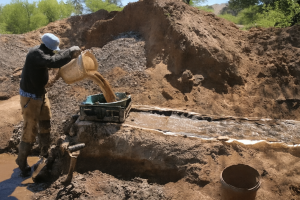
State-owned Mutapa Gold Resources is formalising artisanal mining at its Bindura operations as part of a new gold production model.
The model is being rolled out at the company’s Phoenix Prince area, popularly known as Kitsiyatota, in Bindura.
Mutapa Gold Resources is a subsidiary of the Mutapa Investment Fund.
The company said the approach replicates arrangements already in place at its Jena Mine in Silobela and Elvington Mine in Chegutu.
General manager for contract mining, Tirivashe Vere, said the company had taken control of Mining Lease 21 at Phoenix Prince to restore order without disrupting economic activity.
He was speaking during a town hall meeting in Bindura last week attended by stakeholders, including members of the Joint Operations Command and artisanal and small-scale miners.
“We did not stop any of the activities, or we do not intend to stop any of the activities, but we want to transform what was being done into what can fit into our structures,” said Vere.
“And this structure of what we call the artisanal contract mining model, we have tried it, we have tested it, we are doing it elsewhere, and we also know how to support it.
“This model seeks to achieve two things at once: increase immediate gold production while preserving the option to develop larger deposits in future.”
Zimbabwe recorded its highest ever gold deliveries in 2025, with 46.7 tonnes delivered to Fidelity Gold Refinery worth over US$4.6 billion.
Artisanal and small-scale miners accounted for the bulk of that output, producing 34.87 tonnes, or 74.5 per cent of the total.
Mutapa Gold Resources is the country’s largest gold producer. Its operations produced 2,354 kilogrammes of gold in the nine months to December 2025, followed by 901kg in the three months to March and 925kg in the quarter to June 2026.
The company’s move to formalise artisanal mining comes against that background.
Under the new arrangement at Phoenix Prince, Mutapa Gold Resources will take 30 per cent of gross revenue from contracted miners.
In return, Mutapa will provide technical support, including geologists, mining engineers, surveyors and metallurgists, to make operations safer and more productive.
Vere said the Phoenix Prince area had for years been affected by illegal mining, with little formal production going to the State. The area has an estimated 200 shafts.
Instead of the traditional tribute system, Vere said, the company has opted for mining contracts that are expected to cut bureaucracy and give both parties flexibility.
Non-performing contractors will risk losing their claims, and speculative occupation of shafts will no longer be allowed.
Contracts will be administered by project managers, not senior executives.
Vere stressed that the formalisation drive is not a replacement for large-scale mining.
More: The Herald






Leave a Reply Cancel reply