





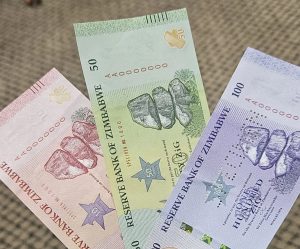
The Reserve Bank of Zimbabwe has injected US$1.34 billion into the foreign-exchange market over the past two years to support the stability of the Zimbabwe Gold (ZiG) currency.
The support was provided through the Willing-Buyer Willing-Seller foreign-exchange system, which allowed companies to access foreign currency through the formal market.
The figures are contained in the RBZ’s fourth-quarter monetary, currency, price and financial developments report.
RBZ Governor John Mushayavanhu said the central bank remains vigilant, adjusting monetary policy to maintain price stability while supporting broader economic goals. Said Mushayavanhu:
“Foreign exchange market interventions amounting to US$1.34 billion since April 2024 have contributed to the smooth functioning of the foreign exchange market under the WBWS arrangement.”
Analysts said the intervention, alongside US dollar sales by companies, has helped maintain industrial activity and production.
Zimbabwe Economics Society vice-president Misheck Ugaro told Business Times that the central bank is gradually positioning the WBWS as the preferred platform by limiting liquidity in the parallel market. Said Ugaro:
“I think that should be viewed as a strength in the sense of forex availability. It shows the central bank’s ability to support the market. It also shows that the market is growing in self-reliance on the interbank.
“The total import bill for the country is only supported by US$1.4bn, which is only around 20% of total demand.
“The ZiG stability is therefore real. Going forward, market confidence will increase.”
However, economist Titus Mukove questioned the strategy’s long-term sustainability, saying it relies heavily on the availability of foreign currency reserves. He said:
“You find that the long-term sustainability of this approach is not clear, and it’s very much questionable because it relies heavily on foreign currency inflows and reserves.
“We don’t know what will happen if the reserves are depleted by funding quasi-monetary activities.
“And there is a need to take caution in addressing this issue of intervention to stabilise the local currency.”
Mukove said effective management of domestic productivity and strict fiscal discipline are crucial.
He added that while the ZiG may stabilise in the short term, transitioning to a monocurrency requires careful planning and structural reforms.
Long-term success, he argued, depends on maintaining exchange rate stability and managing foreign currency inflows and reserves, as RBZ interventions are largely short-term.






Leave a Reply Cancel reply